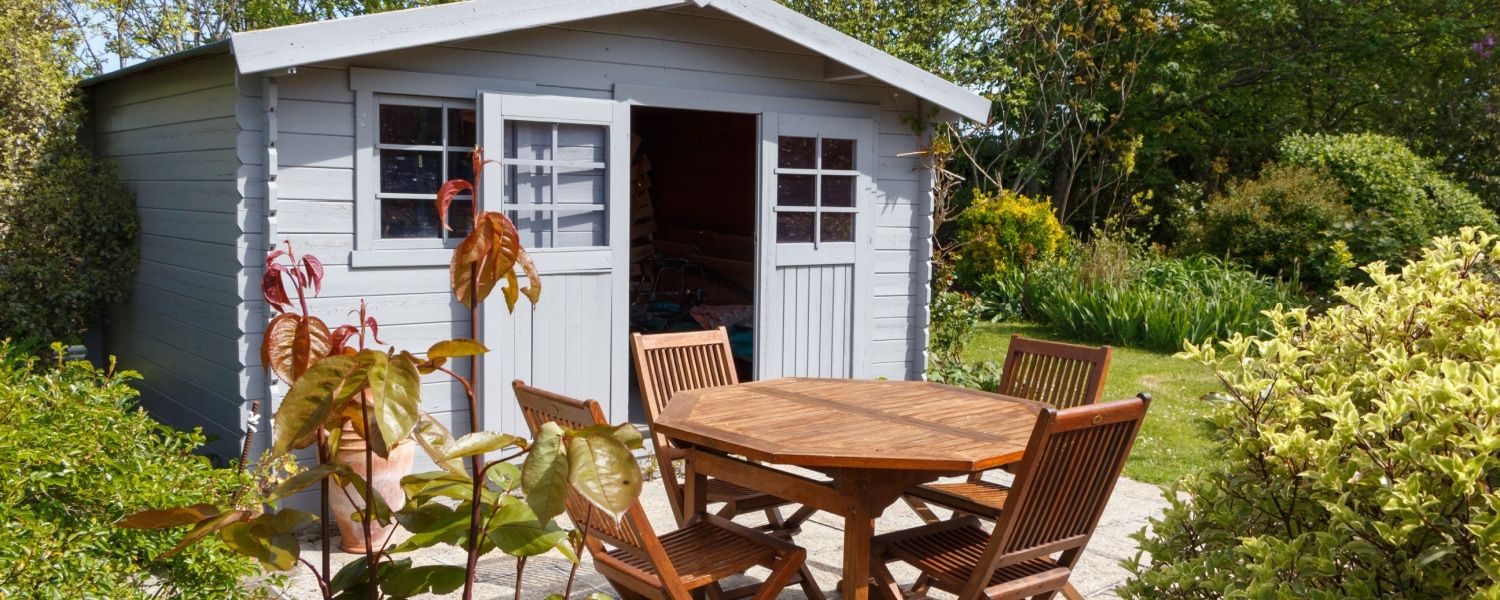
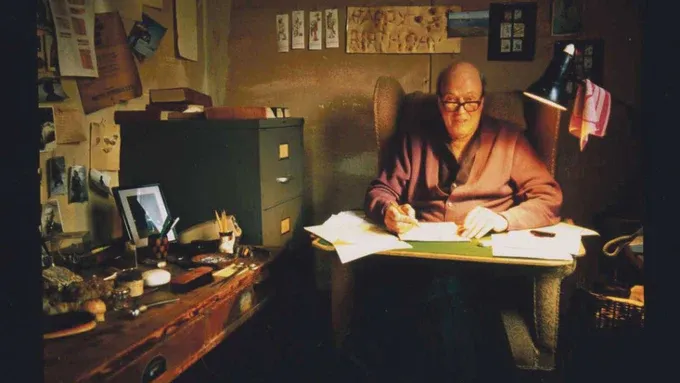
You can go in all directions with a garden house. It can be an extra living room in the summer, a place to sleep for guests, a bar during barbecue evenings and garden parties, a home office — the list goes on! It could even be a place to write a book. Well-known authors such as J.K. Rowling, Roald Dahl and Dylan Thomas worked in their garden house.
The practical side
With a little craftsmanship, a good plan, suitable tools and building materials, a do-it-yourself garden shed transformation is easy to do. Things to remember:
Expansion
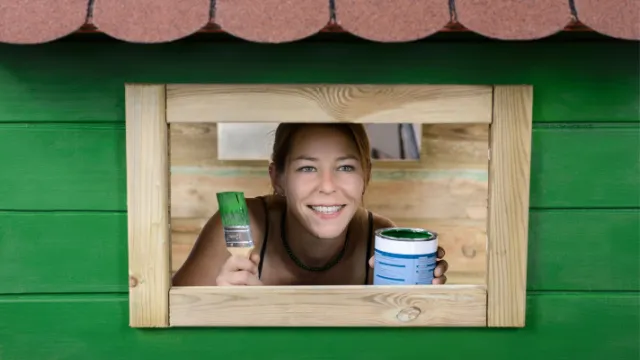
Most garden sheds are not large, and you may want to expand the interior space or add a covered patio. There are two things you need to ensure.
-
The construction must be structurally sound and visually harmonious with the existing building.
-
For an extension, use the same materials as the original shed materials and finish the whole in the same way with stain or paint.
Windows
If a garden shed already has a window, it is often small and single-glazed. Installing new windows provides more light and extra ventilation options in hot and humid weather. A skylight is also an ideal solution for a garden house. In addition to light and air, a skylight gives you more wall space for bookshelves or decorations.
Insulation
Insulation is necessary, especially if you want to use your garden house in winter. Not only does it keep out the cold, but it also helps against mould. It is easiest to apply the insulation material on the inside. Styrodur (XPS) hard foam boards are most suitable for garden houses. This material is also easy to process. Do screw rules on the walls and under the roof before you apply for the plates because, for effective insulation, there must be air between the construction and the insulation material. Double-glazed windows are also good from an insulation point of view, but if you find that too big an investment, you can insulate single-pane windows and the door with self-adhesive tape against drafts and moisture ingress. However, most of the cold comes in through the floor. Not only is installing a raised floor of planks on ledges above the existing concrete or tiled floor effective, but it also enhances the atmosphere of your garden house.
Power supply and heating

Two things indispensable for a multifunctional and ‘hardy’ garden house are an electrical connection and heating. For electricity, the best and safest solution is an underground power cable that connects your meter box to the garden house. The cable should be of type XVB with additional mechanical protection. Burying the cable at least 60 cm deep is crucial for safety purposes.
To keep the garden house warm, you can choose from various options such as wall heaters, electric radiators, infrared heating and even a wood-burning stove. Another option, which is more economical in the long run, is to bury a well-insulated pipe from your central heating boiler to an extra radiator in your garden house.