You will need
Materials
- An old pallet
- Anti-root cloth or pond liner (1.5 x the surface of the pallet)
- Potting soil or garden soil
- Optionally: primer and paint or stain
Tools
- Sander
- Staple gun
- Optionally: paint brushes
Create a vertical pallet garden in 5 steps

- Find an old pallet, preferably one with large openings between the planks.
- Sand the pallet as smooth as possible. This prevents splinters that you can open your fingers on and makes it easier to paint the wood.
- You can leave the wood natural or apply paint or stain. In addition to the ability to play with colours, the latter has the advantage that your vertical garden will last longer.
- Apply the anti-root cloth or pond liner. Spread this material and place the pallet on top. Fold the cloth over the edges of the pallet and staple it. Leave the top of the pallet open, here you fold the cloth in and staple it on the inside of the top plank. Don’t be careful with staples: shooting a staple every 5 centimeters is a good guideline to prevent earth falling out. Trim the canvas for a neat finish.
- Now you can fill the pallet with soil. Do this in a place close to where you are going to place your vertical garden, so you don’t have to drag it far. Scatter the soil in the openings and press it as much as possible. You will probably need more soil than you think, count on at least 80 liters.
Planting your vertical garden
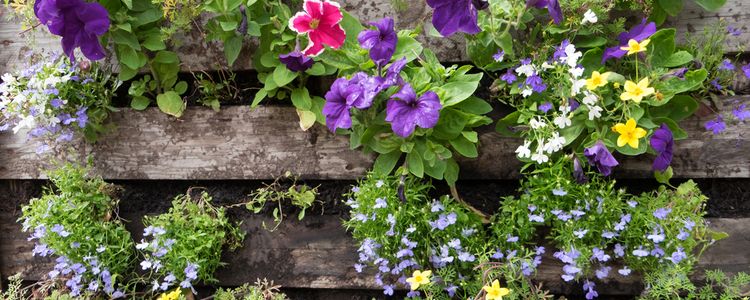
Press the plants into the soil between the planks while the pallet is still horizontal. It is best to wait two weeks before putting it upright so that the young plants can root well.
Tip: plant species that will hang – strawberries for example – at the top.
Vegetable garden, herb garden or ornamental garden?
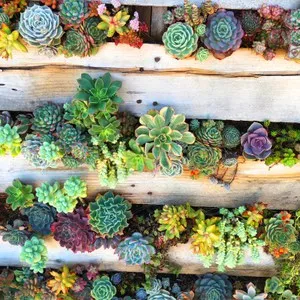
An elegant shrub rose garden, a herb garden for the kitchen, a maintenance-friendly succulent garden … you can design your vertical garden entirely according to your own ideas, although there are a few things that you should take into account. In the garden center where you buy the plants, they can advise you professionally, but here are some tips:
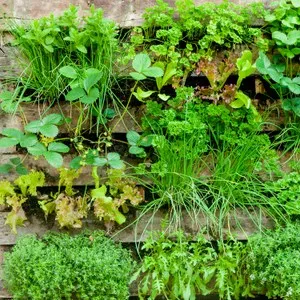
- Do not plant too many different species together. Excess harms and a certain unity in shape and color gives a nicer effect.
- Take into account the place where your vertical garden will be. If that is a place that gets a lot of sun, choose plants that can withstand this. And if it is a shadow spot, plant species that love it.
- Place the plants that require the least amount of water at the top. When you water, the water flows down, leaving the top plants to be dry first.
- Keep in mind that different species have different growth rates. Arrange your vertical garden so that fast growers do not overgrow slower varieties.
As said: there are countless ways to create a vertical garden. If you want to see a lot of ideas for vertical gardens, we have found this inspiring collection for you on Pinterest.