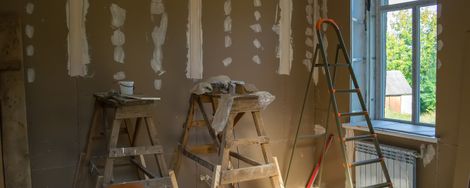
A plasterboard wall – also known as drywall or gyproc wall – can be finished in various ways. Stucco painting, wallpapering or tiling … In all cases, good preparation determines the end result.
Tools
- Putty knife
- Sandpaper
- Plastering trowel
Materials
- Filler / joint filler
- Acrylic sealant
- Reinforcement tape
- Primer
The preparation
Whatever finish you choose, you will have to prepare the new plasterboard wall:
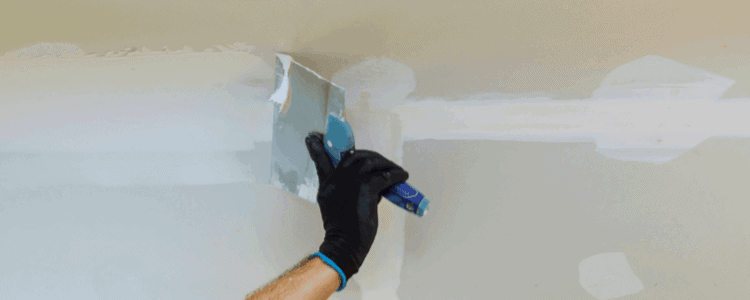
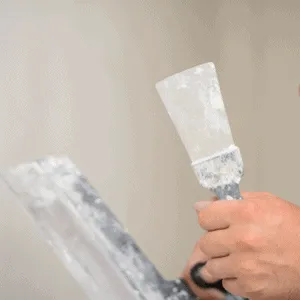
- Fill the screw holes and the seams with filler. You can do this with a putty knife or – for the wider seams – with a plastering trowel.
- Finish seams in the corners with acrylate sealant.
- Cover the seams with reinforcement tape to prevent cracks later on.
- Sand the wall with medium-fine sandpaper, wrapped around a sanding block.
- Brush the wall with a primer. This is necessary because plasterboard absorbs a lot of moisture, which can cause problems during the further finishing. For example, wallpaper glue and tile glue will lose their strength and you run the risk that stucco will not adhere well and paint will badly cover. Finish seams in the corners with acrylate sealant.
Plaster a plasterboard wall
After you have allowed the primer to dry for 12 hours, you can plaster the wall. See how you proceed in this instructive video.
Paper a plasterboard wall
Apply wallpaper directly on the plasterboard, provided it has been treated with a primer.
Tiling a plasterboard wall
Here too, a primer is essential to ensure that the tile adhesive adheres well. A tile wall can best be made on two layers of drywall, where you screw the second layer at right angles to the first one. With such a double wall you can be sure that it has enough bearing capacity for the tiles.
Painting a plasterboard wall
If you are going to paint a stucco plasterboard wall, then it is advisable to treat it again with a primer. The stucco layer also absorbs a lot of moisture, and you do not want to brush three times before your paint finally covers.
Hang something on a plasterboard wall
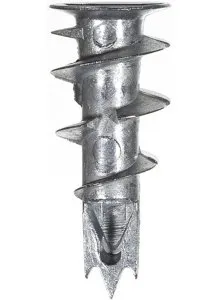
The appropriate way to attach objects to a plasterboard wall depends on the weight of these objects.
- For light items such as a painting or a mirror, a painting hook that you screw into the wall with a plasterboard plug suffices.
- For heavier objects – up to about 35 kilos – use parabolic plugs. These are metal plugs that open when the screw is screwed in and clamp into the back of the plasterboard.
- Really heavy things, such as a kitchen cupboard or a toilet, need more grip. Before installing the plasterboards, you will have to apply an extra reinforcement between the profile bars, for example in the form of a sheet of plywood.