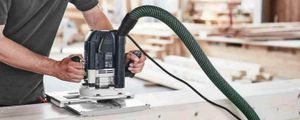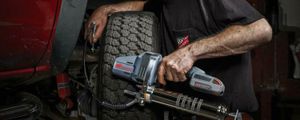
Commonly, loud noise can cause hearing damage. Therefore, when hazardous noise control is not feasible, the use of hearing protection is essential. Many jobs produce a lot of noise, so it is necessary to take effective measures in this case, especially to prevent hearing impairment. That is why it is advisable to opt for professional custom hearing protection because it offers the best protection against high volumes in work situations.
Why choose hearing protection?
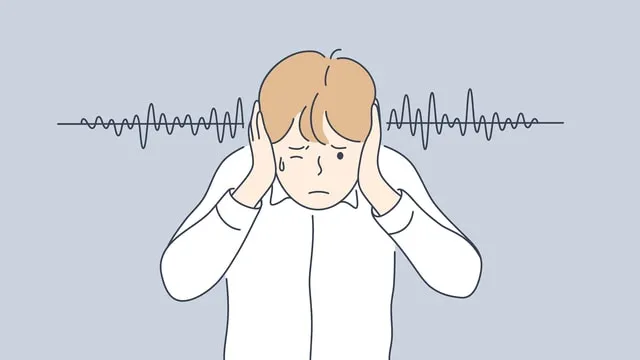
Hearing protection is essential because noise-induced hearing loss is incurable. Prevention alone is the only way to protect the ears. Therefore, not only is it crucial to use hearing protection, but it is also fundamental to pay attention to the level, nature, and duration of exposure to loud noise.
One way to prevent hearing damage is avoiding getting close to loud noise, for example: by purchasing and using quieter machines. In addition, always use hearing protection where necessary. Hearing protection in the workplace must help dampen the noise and bring it below the limit of 80 dB (A). Usually, the aim is to achieve a noise level between 70 and 85 dBA.
Hearing protection regulations

OSHA (Occupational Safety and Health Administration) requires employers to implement a hearing conservation program when noise exposure is at or above 85 decibels averaged over eight working hours, or an 8-hour time-weighted average (TWA). Hearing conservation programs strive to prevent initial occupational hearing loss, preserve and protect remaining hearing, and equip workers with the knowledge and hearing protection devices necessary to safeguard themselves.
Types of hearing protection
Hearing protectors come in many different designs. The choice of hearing protection depends on the nature of the work, the amount of space in the workplace, and the climate, for example: in a warm environment wearing earmuffs can sometimes feel too hot. These are the different types of hearing protection:
- Earplugs (disposable)
- Otoplastics
- Earmuffs
Earplugs – attenuation 10 – 15 dBA
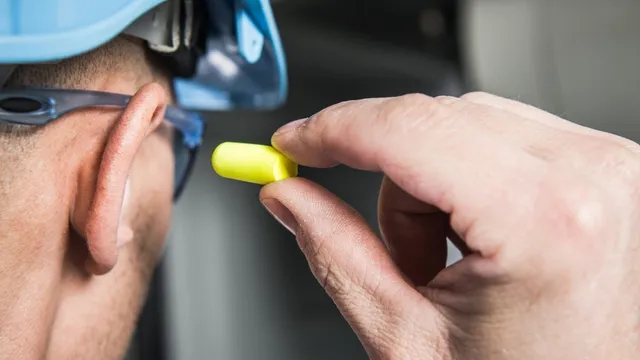
Disposable earplugs are made from plastic and expand and adapt to the ear canal after insertion. Most earplugs consist of various types of foam. They both come in cylindrical or cone shapes. Earplugs are especially suitable if you have to work in warm, humid areas and the environment does not allow you to wear earmuffs. The advantage of earplugs is that they are comfortable and do not put pressure on your ears. Disposable earplugs are maintenance-free as you can simply throw them away after use.
You can often buy a box with several disposable caps. For example, the 3M EAR Classic soft earplugs are available as a pillow pack in a dispenser box. They are made of soft energy-absorbing PU foam. As the foam gets warmer due to body temperature, it softens and moulds to the ear canal. This ‘formation’ provides an excellent seal against noise. If the earplugs are worn for longer periods, the foam will continue to soften so that they continue to feel comfortable.
Otoplastics – attenuation 15 – 30 dBA
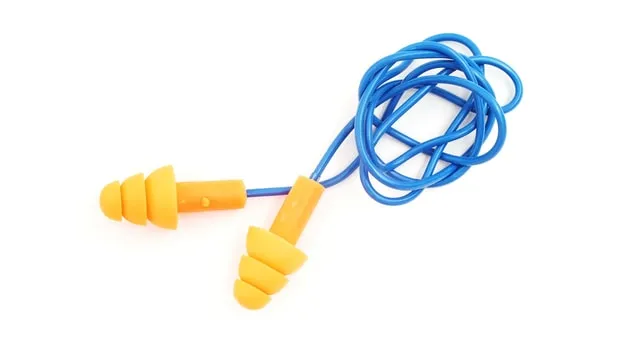
Otoplastics are reusable moulded earplugs and are custom-made, possibly with several filters. Each pair of reusable earplugs is tailored to your circumstances to achieve optimal hearing protection. The best advantage compared to disposable earplugs is, of course, that you don’t have to throw them away after use. Though, it is advisable to clean them regularly and properly to prevent inflammation.
3M reusable earplugs are designed to help reduce harmful noise, including stable, present, and sudden noise. Certain earplugs make it possible to receive communications. Other types of earplugs, such as the 3M E-A-R Tracer, can also be traced with a metal detector. In addition, these earplugs have a visible blue vinyl cord that makes them hard to lose and ideal for use in the food industry.
Earmuffs – attenuation 15 – 35 dBA

Earmuffs are worn like headphones and protect the ears from all kinds of ambient noise by completely sealing. With the right size and a good sealing around the ears, the attenuation is approximately 15 to 35 dBA. For maximum use, the earmuffs must be pressed well against the head and cover the ears entirely. Earmuffs are durable, easy to use, and comfortable to wear. The main disadvantage is that ear muffs distort and/or attenuate the ambient sound, which can be frightening.
Active and passive earmuffs
Earmuffs are divided into active and passive earmuffs. Active earmuffs filter out harmful noise but allow essential sound sources to pass through, such as the voice of your colleagues. With active earmuffs, it is sometimes also possible to listen to the radio or music. Therefore, earing protection with FM radio or hearing protection with Bluetooth ensures that your ears are protected while listening to your favorite songs or podcast.
Passive stands for a static classic earmuff that blocks out sound up to a certain frequency. We call ear muffs without communication option passive earmuffs.
Earmuffs with communication systems
Earmuffs with communication systems have a feature where they can allow effective communication in a noisy environment with people in the immediate vicinity and even with people further away. Hearing protection with Bluetooth and radio is, in most cases, completely wireless. A good hearing protector with communication is, for example, the 3M Peltor Headset with DAB + and FM radio reception, voice-activated menu system for navigation through the menu and 3.5 mm stereo audio input for connecting external devices.