How do you know what material you are going to drill?
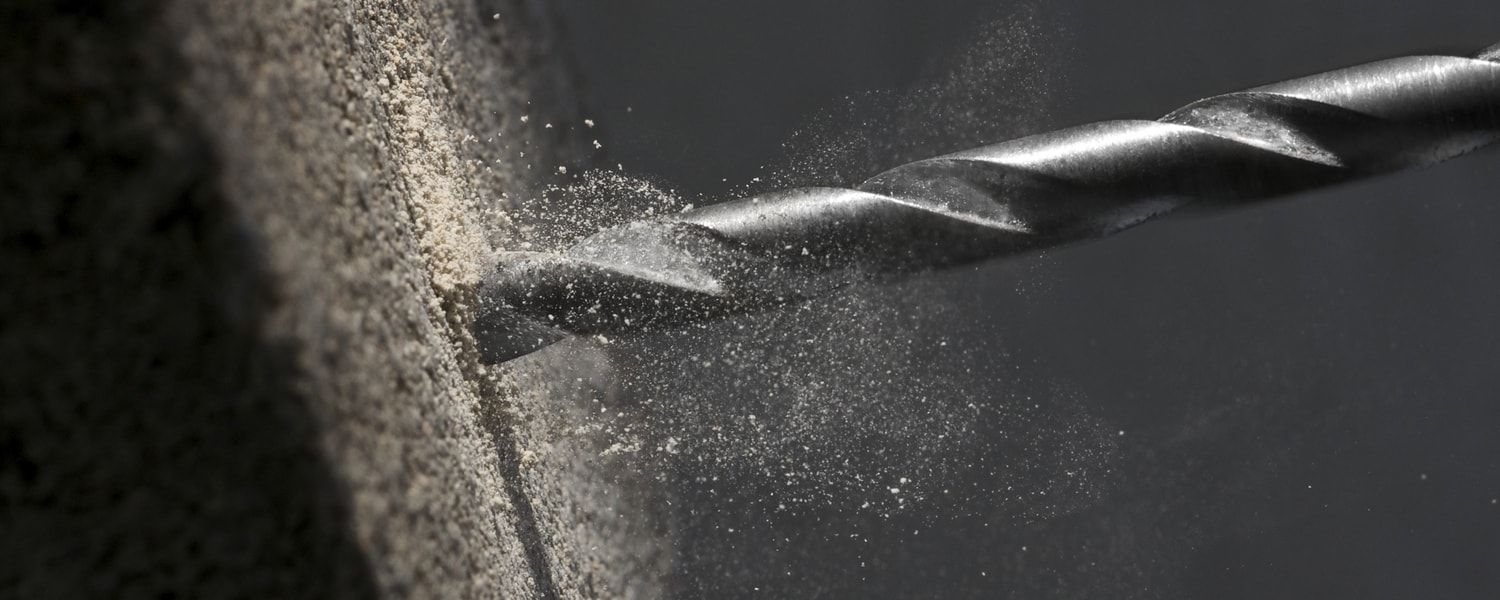
Not sure whether the wall under the plaster layer is made of brick or concrete? Drill a shallow hole and see what colour the grit is. If this is red, then the wall is made of brick. If it’s white or gray, you’re probably dealing with concrete.
The right drilling machine
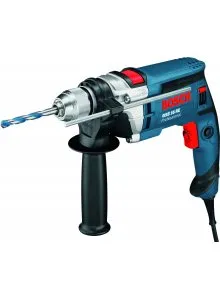
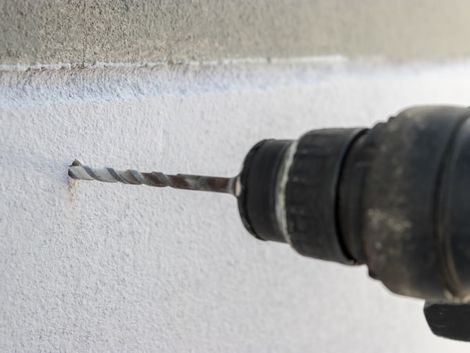
For drilling in stone, you need an impact drill. Although with soft stone types, it is also possible with a simple screw drill without the impact function. Not sure how hard the stone is? Try it first with the impact function turned off. If that is not easy, turn the machine on to impact and slowly increase the speed to prevent damage.
Tip: With a brick wall, you can choose to drill in the brick itself or the joint. We recommend the first way when you want to hang heavier things. Drilling in the joint is easier and faster and has the advantage that you can seal the drill hole invisibly later if necessary.
Concrete is now so hard that you need a special machine for it: the hammer drill. A hammer drill is not only stronger than an impact drill, but it also works differently. The drill makes a hammering movement so that the impact force is much greater than the impact force of an impact drill. A hammer drill is indispensable, especially for drilling in reinforced concrete.
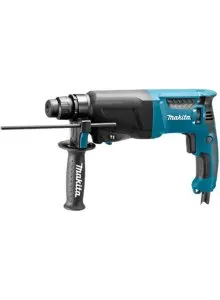
Not every do-it-yourselfer has a hammer drill in his toolbox, and for occasional use, it is cheaper to rent such a machine from the hardware store. If you still want to buy one yourself, you can also go to the hardware store, but the range there is usually quite limited. You will find a wider choice at a specialized tool store.
Another possibility is to try it with your impact drill. This is generally not recommended, but with the right drill bit, you can also drill smaller holes in relatively soft concrete with a strong impact drill.
The right drill bit

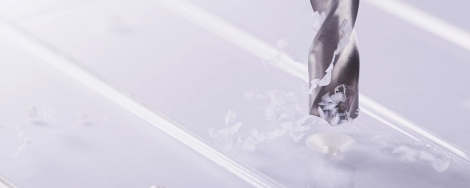
Stone drills and concrete drills look alike, but there is one difference by which you can immediately recognize them: the tip of the drill. With a masonry drill, the material of the drill is the same everywhere, yet with a concrete drill, the point looks different. It has been set up separately because it has to be made of superhard material. The tip of a concrete drill is made of tungsten carbide, also called widia, a ceramic material as hard as diamond.
The right way of working
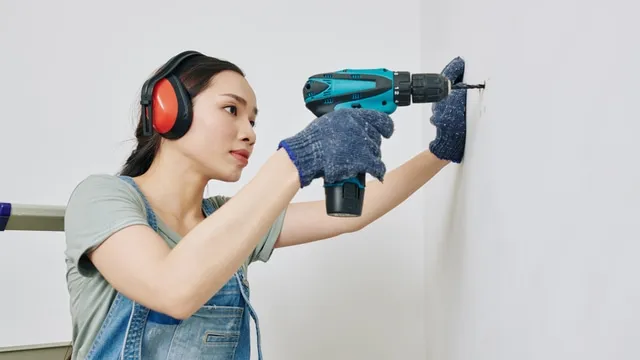
With all the differences in application, function, and materials, the way you work with an impact drill or a drill hammer is largely the same. Here are a few general tips.
- Make sure you are standing firmly and in a stable position. Let the drill do the work without applying too much pressure.
- Drill at a right angle and do not change direction while drilling.
- Choose the right drilling speed: the harder the material, the lower the speed at which you have to drill.
- Pre-drill large holes with a smaller drill bit and then use a drill with the desired diameter.
- Drill exactly as deep as the plug is long. If the hole is too shallow, the plug will protrude. And if it is too deep, it disappears into the wall. Drills are sometimes equipped with an adjustable depth stop, but you can also wrap a piece of tape around the drill bit to the length of the plug.
- Only drill in places where you are sure that there are no electricity, gas or water pipes in the wall and if in doubt, use a pipe finder.