Plant supports prevent plants and flowers from drooping, assist in the growth of climbers and fruit varieties in the vegetable garden, and offer protection against breaking due to wind or heavy rainfall. The best way to support your plants depends on the type of plant and the style of your garden.
Living plant supports
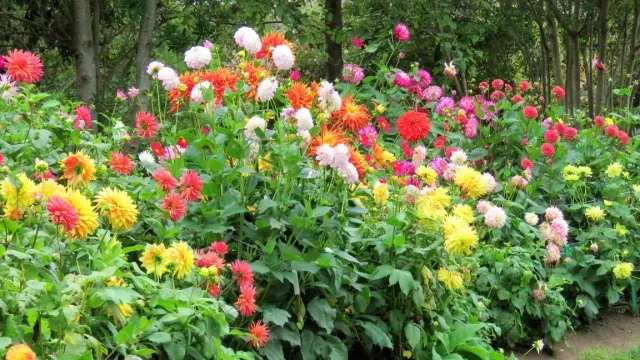
Vibrant bloomers like dahlias, hollyhocks, and autumn anemones often become top-heavy. There’s a risk they might break during a strong gust of wind. You can reduce this risk by giving them sturdy neighbours in the flower bed or border. By placing tall, bushy plants like knotweed or ornamental grasses next to them, you shield them from the wind. You can also shelter the border with shrubs, hedges, and woven screens.
Iron plant supports
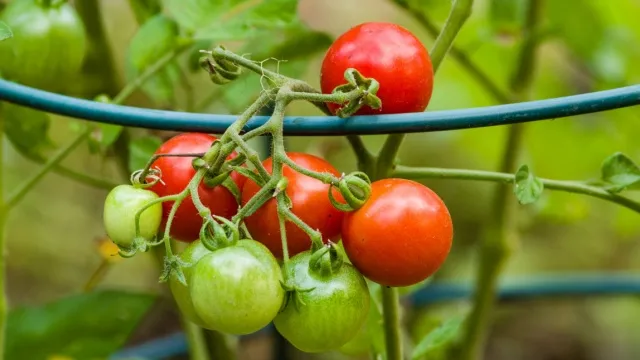
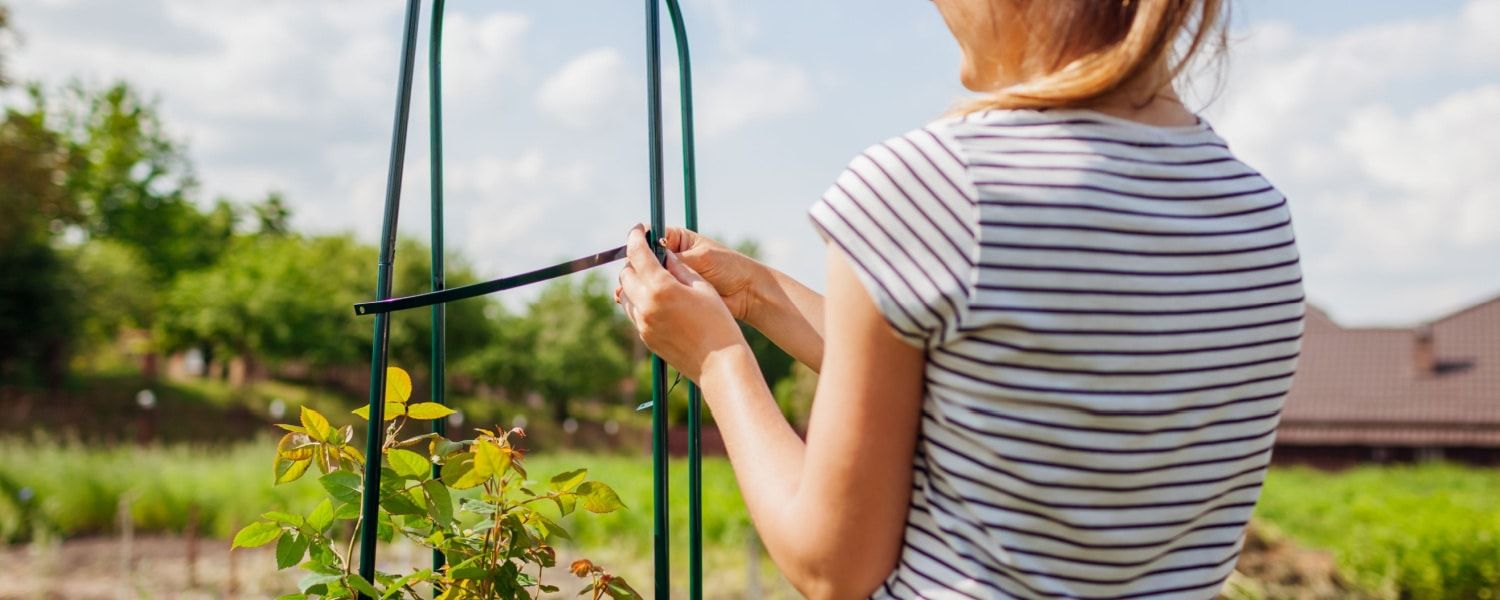
Not only are preformed iron plant supports effective, but can also be a decorative element in the garden. There’s a wide choice of designs, such as obelisks, semi-circular supports, spiral plant pins, and trellis screens that you push into the soil. The semi-circular shapes are ideal for enclosing large clumps of dahlias and delphiniums. Iron plant supports might rust over time; therefore, opt for galvanised versions or supports with a plastic coating.
Wooden plant supports
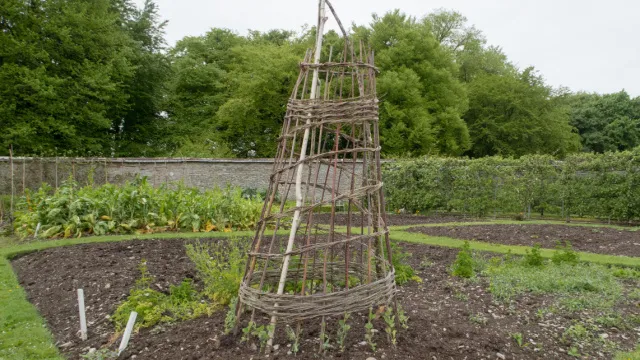
DIY plant supports are usually made of wood. Pruned branches are perfect for not-too-tall plants. After pruning trees and shrubs, save the long, straight branches to tie up your delicate plants. Forked branches are also useful for supporting plants. Place the branches next to your plants at the start of summer and tie up the stems with plastic plant rings or tie tape — elastic wire with a soft outer layer that doesn’t cut into the stems. Alternatively, you can use hemp rope for a natural look. Once the plant has flowered, you can secure the stem higher up again. A decorative idea is a wigwam made from pruned branches. Bamboo canes are also a good option if you don’t have pruned wood.
General tips
- Install the support when the plant is still young. This helps the plant grow in a controlled manner and prevents the stems from breaking as they mature. If you wait too long, it may be difficult to support the plant without damaging it.
- Ensure the support is firmly in the ground — at least 30 cm deep — so it doesn’t topple over in strong wind or when the plant is fully grown.
- As the plant grows, you might need to adjust the ties. Check regularly to ensure they’re not too tight.
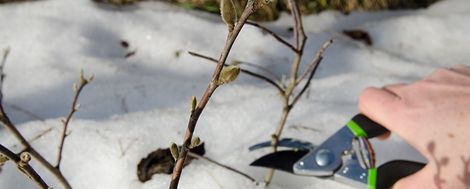
- You can also protect plants by pruning them. This works well for tall border plants that bloom from July onwards because they only produce buds after the longest day (21st June). If you prune them well before this date, they will first form side shoots and then flower buds. This makes the plant shorter, so it’s less likely to fall over. The flowers will appear a bit later, but as the plant branches out more, it will have a richer bloom. Always use clean, sharp pruning shears to avoid damaging the plant.