You have a choice of different materials for your new kitchen countertop
- Laminate
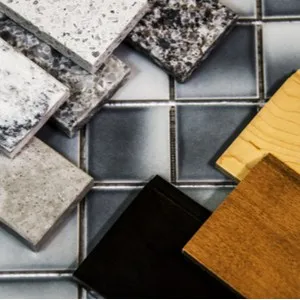
Laminated kitchen countertops are usually made of water-resistant plywood, with a top layer of HPL laminate. HPL stands for High-Pressure Laminate and consists of cellulose fibers compressed under high pressure and temperature, soaked in a synthetic resin. You can choose from a wide variety of colors, wood structures, and other designs.
- Composite
For composite countertops, quartzite, mixed with polyester resin, is pressed under high pressure. Composite countertops are scratch, stain and heat resistant and have a beautiful, crystal-like appearance.
- Natural stone
Natural stone kitchen countertops stimulate the imagination, because different types of stone qualify for the job, each with its own appearance, and no two slabs of natural stone are the same. The most common types of stone for kitchen countertops are granite, marble, slate, and quartzite.
- Solid wood
All kinds of hard woods are suitable for kitchen countertops. Oak is often used, but also tropical hardwood, beech or maple. Or a type of wood with a special colour and pattern, such as cherry. Wood is the choice when you are looking for a warm, natural atmosphere, and take the necessary maintenance (oil or varnish) and the lesser scratch resistance for granted.
- Stainless steel
The choice of “foodies” who want to create a professional environment at home. Stainless steel has a sleek appearance and is maintenance-friendly and hygienic. It is sensitive to scratches though, and a fairly expensive option.
- Concrete
A favorite with many architects because of its robust, industrial appearance. Concrete kitchen countertops are for sale ready-made, with integrated sinks. Like natural stone, concrete is porous, and treatment with oil or the application of an epoxy layer is necessary to protect against acids.
Installation of a kitchen countertop
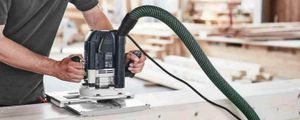
As the various materials suggest, the installation of a kitchen countertop requires various techniques and tools. For a laminate or wooden countertop, you need a jigsaw and possibly a milling machine. An angle grinder is useful for granite, natural stone, and composite. And if you opt for stainless steel, then you probably buy the top ready-made with integrated sinks, and all you have to do is screw it on.
The best advice we can give is: take a look at YouTube. There you will find instructional videos that show how to proceed when installing kitchen countertops of any kind of material.
Here we give a few general tips. Things to keep in mind, regardless of the type of countertop that you want to place in your kitchen.
-
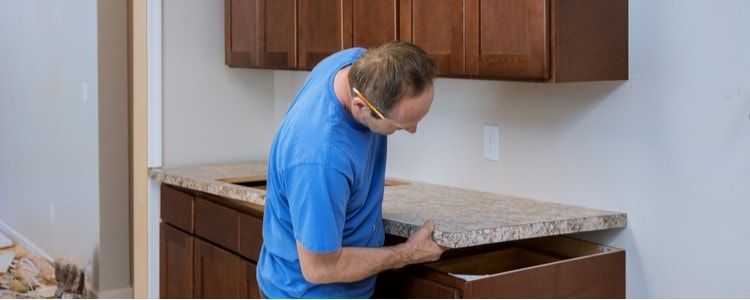
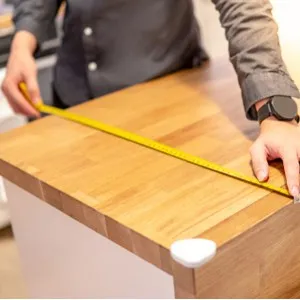
Bear in mind that the wall can be uneven when you cut a kitchen countertop – or have it cut. Always measure at different points. And check whether the top protrudes the same from the bottom cupboards everywhere.
-
Also check with a spirit level whether the cupboards on which the countertop is to be placed are correctly positioned. Adjust any height differences with the help of adjusting plates, so that the top is completely horizontal and is supported everywhere.
-
Keep a joint of at least 2 mm on all sides where the blade touches the wall so that the material does not come under stress when expanding.
-
You can connect straight countertops with plates that you screw on at the bottom. For rounded tops, you need special connection profiles.
-
When everything fits, screw the worktop into place on the kitchen cabinets. A tension clamp, or sergeant, helps to keep the worktop in place.
-
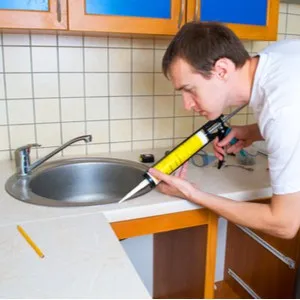
Finish the seams between the countertop sections, around the taps and sinks and between the top and the wall with silicone sealant. Tip: Use a kit in the color of the countertop, then the seams will stand out less.