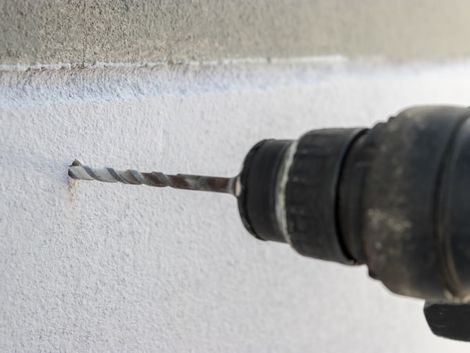
The correct speed for drilling depends on 3 things
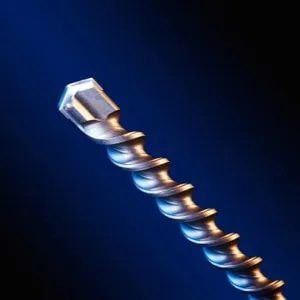
In this article we assume the most common type of drill: the twist drill, which you use to drill not too large holes. The ideal speed for different jobs depends on:
The harder the material, the higher the speed … but not always
As a rule of thumb, it is best to drill at low speed in soft materials, such as pine. After all, you don’t need more speed, and working calmly helps keep the drilling machine well under control. Harder materials such as hardwood, steel and stone require a higher drilling speed. But in stainless steel you have to drill at a speed that is not too high. This material has the tricky property of becoming even harder when heated. Drill in stainless steel rather too slowly than too fast, and push the button a little further when the drill starts to ‘bite’. Drilling in glass is done as slowly as possible to prevent breakage and cracking.
The drill diameter
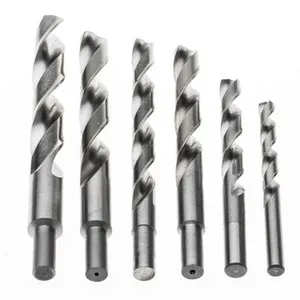
The larger the hole you are going to drill, the harder the drill has to work, with the logical consequence that you will need a higher speed to get the job done.
That is not always ideal. For example, softwood can quickly get burned by heat. And unless you have a column drilling machine, it will be harder to drill a perfectly straight hole at exactly the right depth, especially in hard materials. That is why it is good practice to always pre-drill large drill holes with a smaller drill diameter.
The material of the drill
Especially when you use your drills intensively, the material they are made of can also be a consideration for the correct speed. HSS (High Speed Steel) is a tough material that is suitable for both high and low drilling speeds. Hm (Tungsten Carbide) drills are even harder and more durable and suitable for even higher speeds, but they are also brittle and can break if misused. For rock drills, the point is soldered to the drill shank. In extreme heat, the solder can peel off and the tip will remain in the hole. For example, running a masonry drill at the highest speed to try to forcefully drill a hole in concrete is not a good idea.
The right speed for advanced users
Professionals – especially in industry – use a formula to calculate the speed: ω = v * 1000 / (π * d).
In this formula, v is the speed. This is the desired rotational speed of the drill, expressed in meters / minute. Because the cutting speed is measured on the outside of the drill, it is partly dependent on the drill diameter. From the v and d (the diameter of the drill in mm), the ω (the correct speed in revolutions per minute) can then be derived. If you want to know the ins and outs, you will find more explanation and calculation tables in this Wikipedia article. And for those interested in trouble-free drilling in the most diverse materials, the Kliumblog offers a wealth of information.