How does an impact drill work?
As the name implies, an impact drill makes a beating movement. A round disc is mounted on the shaft of the machine, just behind the chuck, with serrated teeth on one side. Another round disc with teeth is stuck in the machine, in contrast to the rotating disc on the shaft. When the hammer mechanism is off, the discs do not touch, but if you switch it on, you release a spring which causes the teeth of both discs to interlock. The clockwise rotation of the shaft produces a very strong vibration. It is this movement that ensures you can crush stone with an impact drill.
How does a hammer drill work?
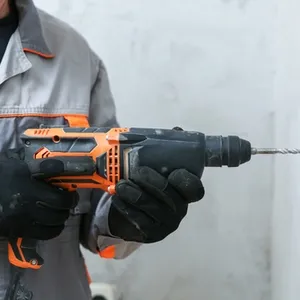
The big difference between an impact drill and a hammer drill is the transmission of the impact force. With a hammer drill, the impact is formed due to a pneumatic piston that builds up air pressure. Unlike an impact drill, the impact is transferred directly to the drill. The force with which this happens is much greater than that of an impact drill and makes the hammer drill suitable for the toughest drilling jobs.
A few more differences
There are other differences besides the strength. An impact drill is usually equipped with a quick-action drill chuck, the same one you will find on most cordless drills. It is the most common drill head, which fits almost all drills.
You can also recognize a hammer drill by an SDS-Plus or SDS-Max drill head. The drill is anchored even more firmly in these drill heads, which is necessary to prevent it from slipping or coming loose from the great force the machine delivers.
The head is also interchangeable with many rotary hammers. If you want to use an ordinary wood drill, metal drill or stone drill, you can also mount a keyless chuck on these machines.
What are both drills used for?
The harder the material you want to drill in and the larger the drill hole, the more power you need. A hammer drill is the machine of choice for drilling concrete. With an ordinary drill or impact drill, this is hardly possible, if at all. Drilling in brick, wood and metal, on the other hand, is doable with an impact drill, while a hammer drill, with its much greater power, can quickly damage softer materials. That is, precisely, why you can also use a hammer drill to break smaller surfaces.
You can find more information about the best drill for the job in Choose the drilling machine that suits you.