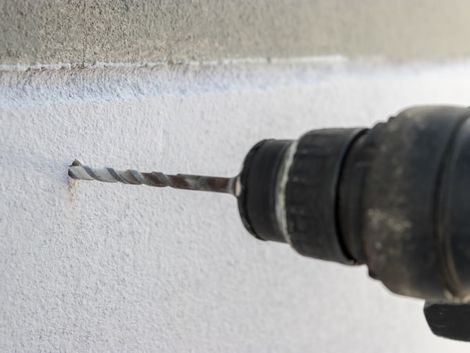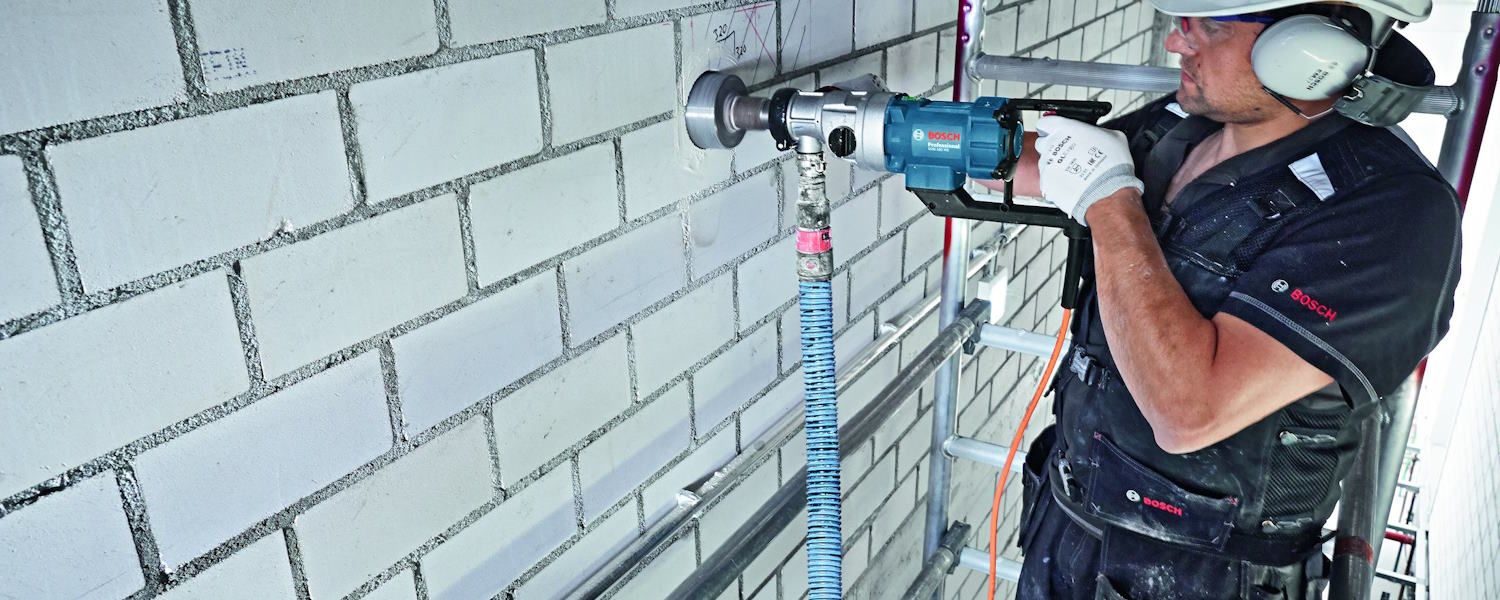
A diamond drill is an electric tool for drilling into hard materials such as concrete, natural stone, asphalt, and ceramics. The combination of a powerful motor and a core drill with diamond segments allows you to drill large holes in hard surfaces with minimal pressure or friction.
Diamond Drill vs. Rotary Hammer
A rotary hammer is commonly used to drill into concrete and hard stone types. Drilling with a rotary hammer is easier and faster than using a diamond drill, up to a certain diameter. The difference lies in the tools they use. A rotary hammer uses spiral drills, while a diamond drill uses core drills. A core drill only cuts the circumference of the hole, leaving the core intact, which falls out once the drill has penetrated the material. This reduces the amount of material that needs to be removed, allowing for larger diameters to be drilled with less friction. For holes from around Ø 32mm, a diamond drill performs better than a rotary hammer.
Drill Stand
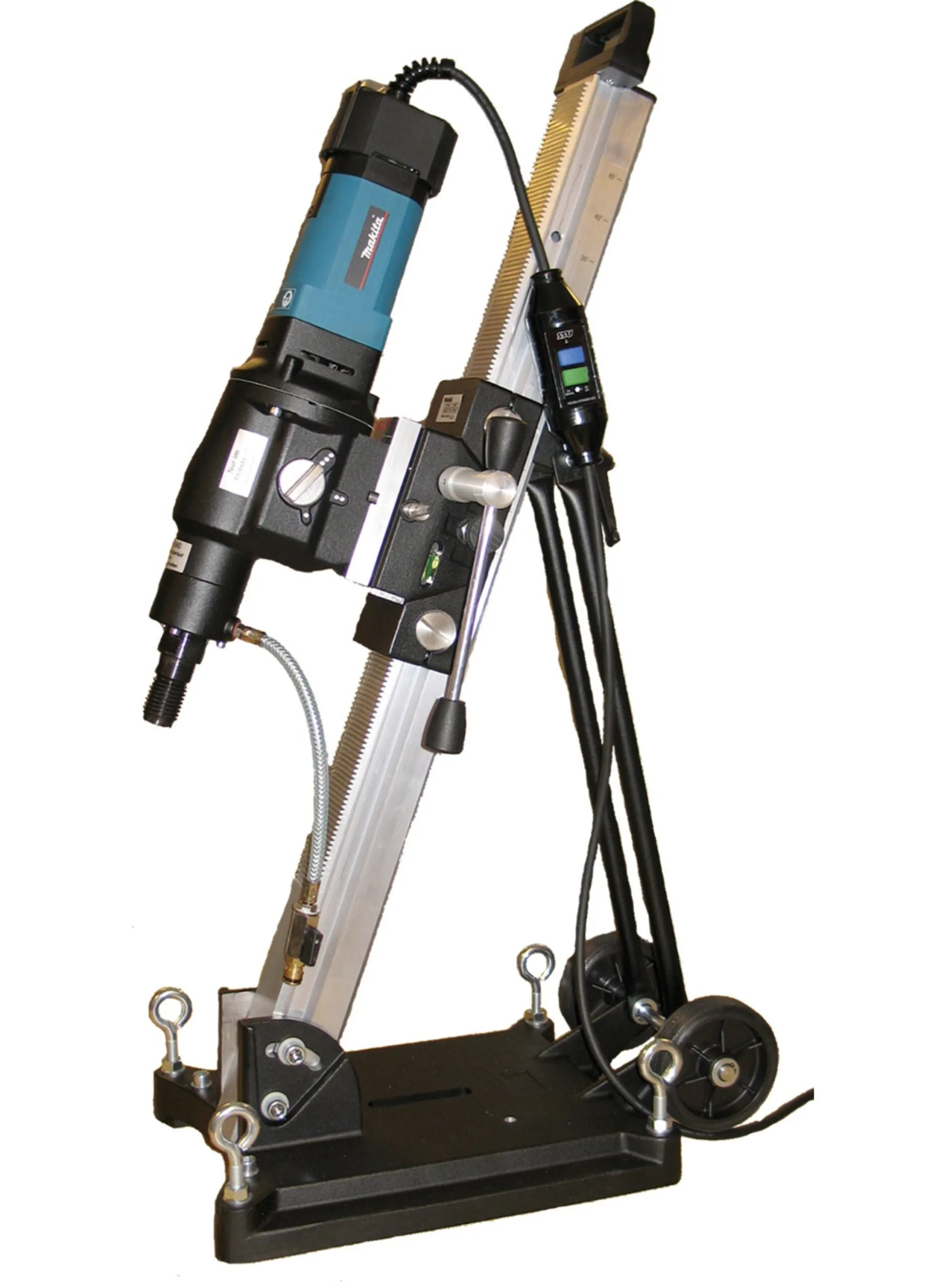
A diamond drill is one of the heavier and larger electric tools. Additionally, drilling is often required in difficult locations and positions. A typical accessory for diamond drills is a drill stand or tripod. Using a drill stand increases convenience and safety and is a necessary aid for very large holes that are difficult to drill manually.
Wet or Dry Drilling
When purchasing a diamond drill, one of the choices you’ll need to make is whether to use water.
Wet Drilling
With wet drilling, a water hose is connected to the machine and supplies water via a tap, pressure vessel, or pump. The water cools the teeth of the core drill and mixes with the dust and debris produced. A key advantage of wet drilling is that it creates a dust-free working environment. The cooling effect of the water makes wet drilling more suitable for longer drilling sessions and larger hole diameters, and the drills also tend to last longer.
Dry Drilling
Dry drilling can be more convenient because you don’t need to source water first. This makes a dry-operating diamond drill more versatile: you can use it in locations where water isn’t readily available. However, dust extraction is necessary since a substantial amount of dust and debris is generated during drilling. Due to the lack of water’s cooling effect, dry drilling is less suitable for drilling large holes in concrete.