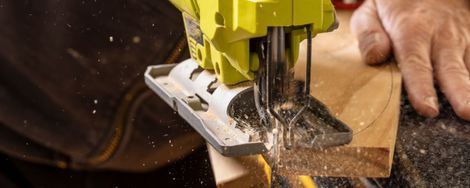
A jigsaw is a versatile tool for cutting complex shapes and curved lines. However, when you want to cut straight lines, you might struggle to achieve the same precision as with a circular saw. Yet, with the right techniques and tools, it is possible to make perfectly straight cuts with a jigsaw. How do you go about it?
Use the Right Saw Blade
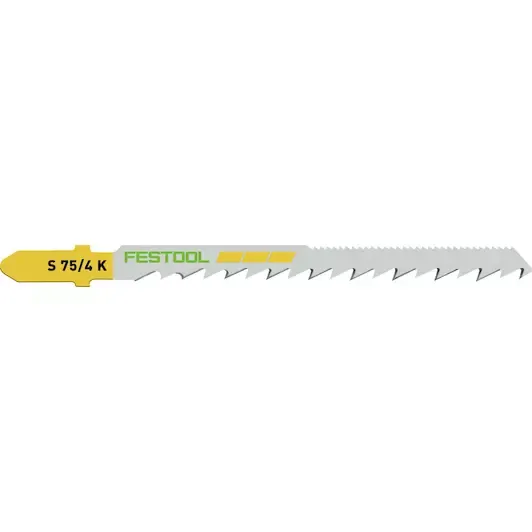
The choice of saw blade is important for a precise cut. Jigsaws can work with a wide range of blades, tailored to the material and the desired precision and speed. For cutting straight lines with a jigsaw, use a blade with fine teeth, suited to the material you are cutting and specifically designed for straight cuts. Blades intended for cutting curves can result in an uneven cut.
Tip: Regularly check the condition of your blade. A dull blade can cause you to slip, while only a sharp blade ensures precise cuts.
Accurately Mark the Cutting Line
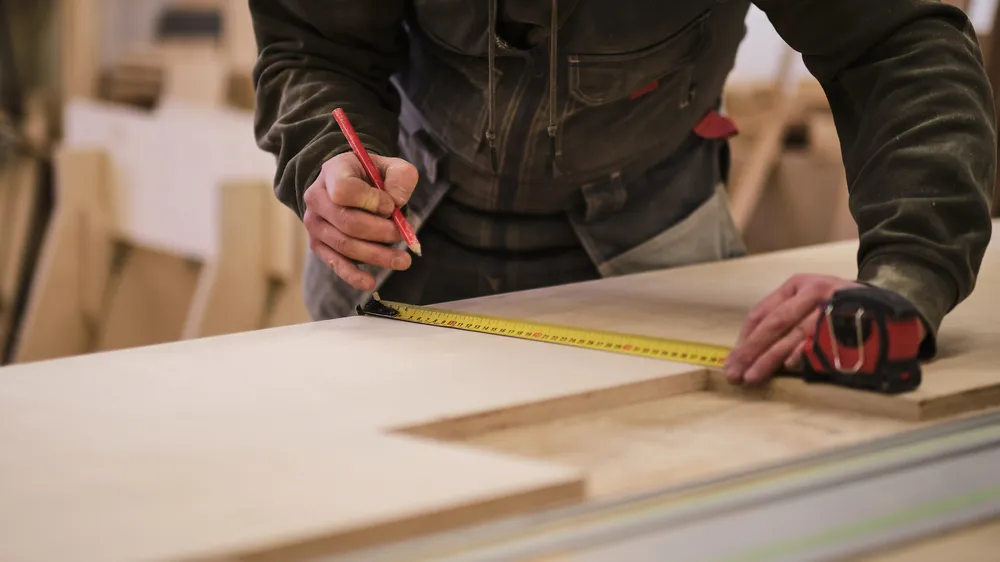
Accuracy begins with proper preparation. Mark the cutting line with a sharp pencil and a straight edge or square. Check that the line is perfectly straight, especially when cutting large pieces. Marking the cut line on painter’s tape can provide better visibility and help prevent splintering, especially on delicate materials like veneer or laminate.
Use a Cutting Guide
A cutting guide is an essential tool if you want to cut straight lines with a jigsaw. You can use a professional guide rail, but there are other solutions. For example, a straight wooden batten, a ruler, or a spirit level, which you secure with clamps to prevent shifting during the cut. When positioning the guide, measure the distance to the side of the jigsaw base. This is the extra distance you need to maintain between the cut and the guide.
Tip: Attach the guide to the inside of your workpiece, not the piece you intend to cut off. If you accidentally slip with the jigsaw, you will damage the scrap piece instead of the final result. Read also: Guide Rails: Types and Usage.
Set the Jigsaw Correctly
Many jigsaws allow you to adjust the speed of the saw blade. For cutting straight lines, it’s better to choose a lower speed. This gives you more control and prevents slipping. Additionally, jigsaws have a pendulum function, where the blade moves back and forth. This is useful for quickly cutting thicker materials, but it can make the cut less precise. Turn off the pendulum function when making a straight cut.
Saw Slowly
When cutting straight lines, a bit of patience is a virtue. If you cut too quickly, you risk bending the blade or losing control, resulting in a crooked cut. Hold the saw firmly with both hands and ensure that the saw base rests flat on the material. Saw slowly and steadily without pushing the saw forward. Let the blade do the work.